1. Introduction: Why This Guide Exists
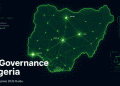
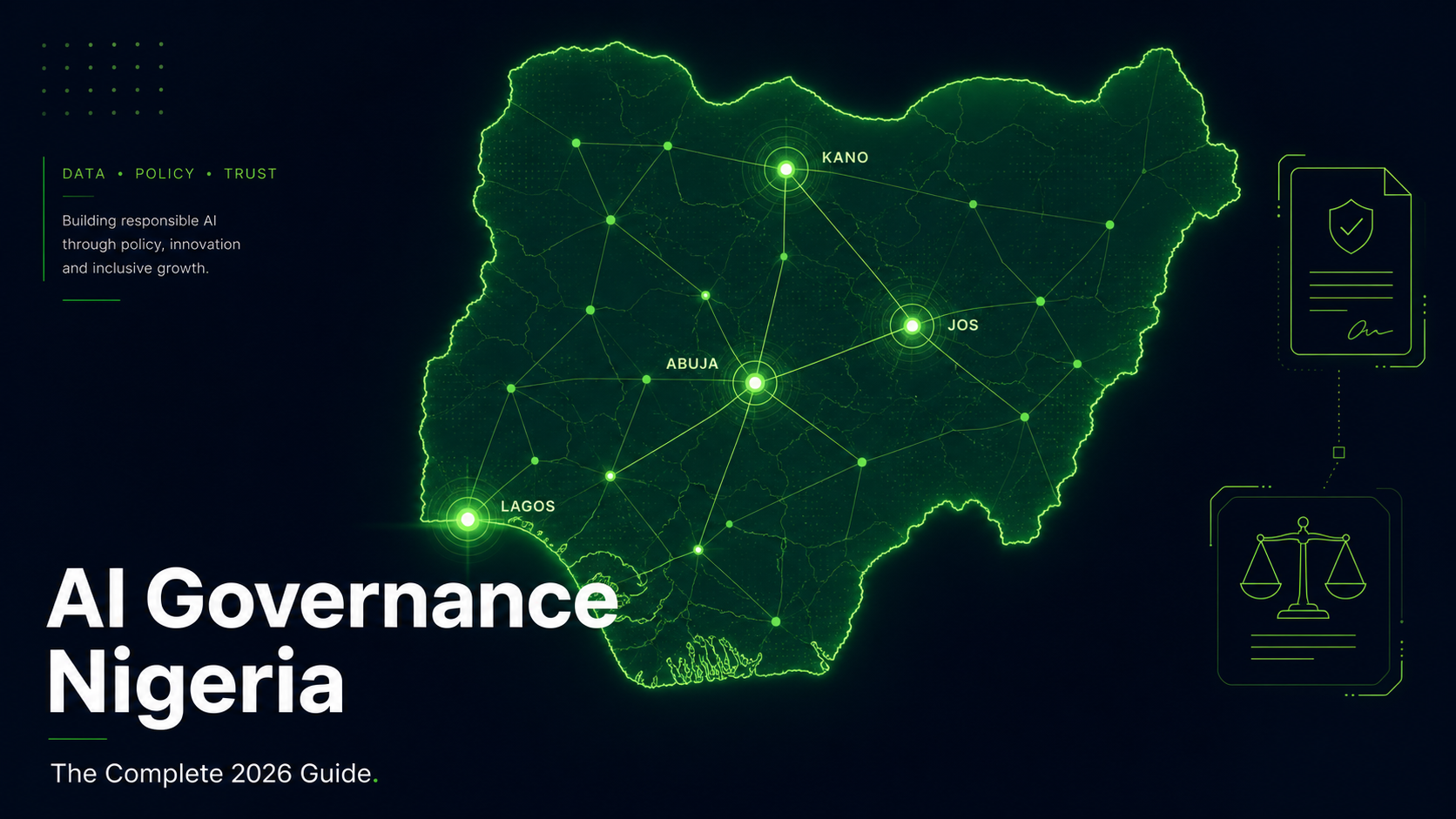
I had just completed Semrush’s seed keyword course. Applying what I’d learned, I typed “AI in Nigeria” into Google. What came back stopped me. There were opinion pieces and press releases. There were scattered references to NDPA obligations buried in law firm blog posts. Nothing brought it all together — no single resource a Nigerian founder, compliance officer, or regulator could open and leave with a clear picture of what the rules are, what they require, and what comes next. That gap is why NaijaAI exists.
This is the guide I couldn’t find.
Who it’s for: Founders mapping compliance exposure before they scale. Legal and compliance officers advising organisations that process Nigerian data. Policymakers benchmarking Nigeria’s governance framework against global peers. Investors assessing regulatory risk before deployment. Students and researchers who need one structured reference, not a patchwork of dated sources.
What you’ll learn: The binding rules that apply to AI in Nigeria today — not future aspirations. The full history of Nigeria’s regulatory framework from 2015 to 2026. The exact provisions of NDPA Section 37, GAID 2025, and the CBN sandbox that create compliance obligations right now. A calibrated, evidence-based maturity score (2.3/5.0) with a transparent methodology. A practical compliance checklist by organisation type. And an honest assessment of where Nigeria’s governance architecture works — and where it doesn’t.
One note on scope: Nigeria doesn’t yet have a dedicated AI Act. Everything here applies to AI through existing legal instruments — primarily the Nigeria Data Protection Act (NDPA) 2023, the General Application and Implementation Directive (GAID) 2025, and sector-specific regulations. Two AI bills are before the House of Representatives as of May 2026. Neither is law. This guide is anchored in what’s binding today.
[→ Master Pillar: AI in Nigeria: The Complete 2026 Guide]
📥 AWARENESS OFFER — Free Download New to Nigeria’s AI governance landscape? Download the Nigeria AI Governance Landscape Map — a one-page PDF that shows every major regulatory instrument, the institution that enforces it, its legal status (enacted, draft, or non-binding), and how they connect. It’s the single-page orientation this topic deserves. [Download the Nigeria AI Governance Landscape Map — Free PDF]
2. What Is AI Governance in Nigeria, and Why Does It Matter?
📊 MEDIA: Stat Box Build a four-cell summary stat box (Canva or HTML) containing: — 220M+ people affected by Nigeria’s AI governance choices — 500+ languages underrepresented in Nigerian AI training data — 2.3/5.0 Nigeria’s AI governance maturity score (NaijaAI, 2026) — 6 regulators with overlapping AI mandates, no coordination mechanism Place this immediately below the section heading — before the first paragraph — as a visual anchor for skim readers.
AI governance is the system of laws, policies, institutional mandates, technical standards, and ethical norms that shape how AI systems are built, deployed, monitored, and held accountable. In Nigeria, that system doesn’t start with a dedicated AI Act. It starts with the NDPA 2023, layers in sector-specific regulation from the CBN, NCC, and SEC, adds the strategic direction of the National AI Strategy (NAIS) 2025–2029, and sits inside an institutional architecture that’s still being assembled.
Why does this matter right now? Because AI deployment in Nigeria isn’t waiting for governance to catch up. A Lagos fintech approves your loan in under three seconds. An Abuja health-tech platform triages patient symptoms before a doctor sees them. A federal agency is piloting AI identity verification for millions of Nigerians. None of these systems operate under a dedicated AI law. All of them have live compliance obligations under the NDPA that most of their operators haven’t fully mapped.
Three structural reasons make Nigeria’s governance moment consequential — not just for Nigeria, but for the continent.
Scale. Nigeria is Africa’s largest economy and most populous country, with over 220 million people. AI adoption in fintech, agriculture, healthcare, and public services is accelerating at a pace that governance institutions haven’t matched. A biased credit-scoring model doesn’t affect a handful of applicants — it affects millions.
Diversity. Nigeria has over 500 documented languages, deep rural-urban stratification, and socioeconomic complexity that most AI training datasets don’t reflect. The NAIS 2025–2029 acknowledges this directly: limited locally representative data means algorithmic bias is often built into Nigerian AI systems by default, not by intent. There’s currently no algorithmic impact assessment obligation — no formal mechanism to catch or correct this at scale.
Ambition. The NAIS positions Nigeria as a sub-Saharan AI governance leader and explicitly aligns with the African Union Continental AI Strategy, adopted in July 2024. That ambition requires credible governance infrastructure at home. The Oxford Insights Government AI Readiness Index 2024 placed Nigeria among Africa’s leading AI-ready governments — a ranking that carries responsibility as well as recognition.
[→ Cluster A4: Nigeria’s National AI Strategy: Analysis & Verdict]
3. History of AI Governance in Nigeria: From 2015 to 2026 {#history}
📊 MEDIA: Regulatory Timeline Graphic Create a horizontal timeline in Canva or Google Slides with six clearly labelled nodes:
- 2015 — Cybercrimes Act (enacted, in force) — colour: solid green
- 2019–2020 — NDEPS 2020–2030 (enacted, in force) — solid green
- 2023 — NDPA + two AI bills (NDPA: enacted; bills: dashed/pending) — green + dashed amber
- 2024 — NBA Guidelines + Bletchley Declaration (voluntary/international) — blue
- 2025 Jan — GAID (enacted, in force) — solid green
- 2025 Sept — NAIS 2025–2029 + NITDA Draft Code (non-binding/draft) — dashed amber
Use a legend: solid green = binding law; dashed amber = draft or non-binding; blue = voluntary or international. Add a shaded red zone across the full timeline labelled “Healthcare AI: ungoverned throughout.” Export as a PNG and embed at the top of this section.
Nigeria’s AI regulation history is short but accumulating fast. The most important skill for any organisation in this space is distinguishing what’s binding law today from what’s still strategic aspiration. This timeline makes that distinction explicit at every step.
2015: The Cybercrimes Act — Nigeria’s Digital Foundation
The Cybercrimes (Prohibition, Prevention, etc.) Act 2015 is enacted and in force. It’s not AI-specific, but it’s the first legal building block on which AI governance would later be constructed. Its provisions on unauthorised computer access and electronic fraud apply to AI-enabled fraud and cyberattacks today.
2019–2020: The NDEPS — Embedding AI in the National Policy Framework
The National Digital Economy Policy and Strategy (NDEPS) 2020–2030, enacted and in force, placed artificial intelligence inside Nigeria’s eight-pillar digital development framework. Pillar 4 (Digital Innovation and Entrepreneurship) and Pillar 7 (Digital Society and Emerging Technologies) both reference AI explicitly. The NDEPS created the policy environment that made the NAIS and NITDA’s AI Code of Practice conceptually possible.
2023: The NDPA — Nigeria’s Most Important AI Law Today
The Nigeria Data Protection Act (NDPA) 2023 is enacted, binding, and actively enforced by the Nigeria Data Protection Commission (NDPC). It’s the cornerstone of AI governance in Nigeria and will remain so until a dedicated AI Act passes.
Section 37 is the most directly AI-relevant provision in Nigerian law. It gives individuals the right to human review of any automated decision — a decision made by AI or algorithm — that carries legal or significant effects on them. If your organisation uses AI in lending, hiring, insurance, healthcare, or public services, this is an active legal obligation enforceable by the NDPC. It’s not a future requirement. It applies now.
The NDPA’s other AI-relevant provisions include mandatory Data Protection Impact Assessments (DPIAs) for high-risk data processing, transparency requirements for automated decision logic, restrictions on special category data (health, biometric, religious, ethnic), and safeguards for cross-border data transfers. The GAID 2025 extended these obligations specifically to large-scale AI model deployers.
[→ Cluster A1: Nigeria Data Protection Act 2023: AI Compliance Guide]
2023: Two AI Bills — Proposed, Not Enacted
Two AI-specific bills entered the House of Representatives in 2023: HB 942 (Control of Artificial Intelligence Technology Usage Bill) and HB 601 (National Artificial Intelligence and Robotic Sciences Establishment Act). Both remain under legislative review as of May 2026. They signal direction but create no current compliance obligations. Watch them — particularly HB 601, which would establish a National AI Commission — but don’t build your compliance programme around their anticipated passage.
2024: NBA Guidelines and International Commitments
In September 2024, the Nigerian Bar Association (NBA) adopted AI guidelines for the legal profession — voluntary, not legally mandated, but precedent-setting. The NBA is the first Nigerian professional body to act on AI governance. Medical councils, engineering bodies, and accounting institutes are watching. Nigeria also signed the Bletchley Declaration on AI Safety and formally aligned with the African Union Continental AI Strategy — the continental framework that the NAIS explicitly references.
2025: GAID and the National AI Strategy
Two major developments defined 2025. The General Application and Implementation Directive (GAID) of the NDPA, in force since January 2025, is binding law. It extended NDPA obligations to Data Controllers of Major Importance (DCMI) — a new category covering large-scale AI model deployers. Obligations include mandatory DPIAs, a designated Data Protection Officer (DPO), and enhanced documentation requirements. If you deploy AI at scale in Nigeria, you should have reviewed your DCMI status already.
The NAIS 2025–2029, published by NCAIR/NITDA in September 2025, is non-binding. But it’s the most structured national AI strategy in sub-Saharan Africa. It adopts the NIST AI Risk Management Framework (AI RMF 1.0) as its procedural reference and establishes five strategic pillars: infrastructure, talent, adoption, ethics, and governance. NITDA’s Draft Code of Practice for Artificial Intelligence (2025) is under consultation and not yet in force — but finalisation is likely within 12–18 months. Organisations that self-assess against it now will have a real compliance advantage when it’s finalised.
[→ Cluster A4: Nigeria’s National AI Strategy: Analysis & Verdict] [→ Cluster A2: NITDA’s AI Framework: What It Means for Startups]
4. Key Terms to Know {#key-terms}
📊 MEDIA: Illustrated Glossary Cards Create eight simple definition cards in Canva — one per term below — using a consistent layout: term name (bold, large), one-sentence plain-English definition, and a small icon (e.g. a scale for accountability, a warning triangle for high-risk AI). Export as a single scrollable PNG strip or an embedded image grid. This replaces the table for mobile readers, who find wide tables difficult to navigate.
These definitions come from Nigeria’s primary regulatory instruments. They’re written for practitioners — founders, compliance officers, legal advisors, policymakers — not academic journals.
Automated Decision-Making — When an AI or algorithm makes decisions about individuals (credit, employment, insurance, access to services) without meaningful human involvement. Under NDPA Section 37, Nigerians have a legally enforceable right to request human review of any such decision with legal or significant effects. This right is active today.
Algorithmic Accountability — The obligation to explain, audit, and accept responsibility for AI-driven decisions. In Nigeria, it’s primarily enforced through NDPA transparency provisions. There’s no standalone algorithmic accountability law yet, but Section 37 creates a functional accountability obligation for automated decision-makers.
High-Risk AI — Under the NITDA Draft Code of Practice (proposed, 2025), any AI system whose failure or misuse could significantly affect fundamental rights, safety, health, or critical services. It’s a binary classification: either a system qualifies as high-risk or it doesn’t. This is less granular than the EU AI Act’s four-tier model.
Data Controller of Major Importance (DCMI) — A category created by GAID 2025. Any organisation that processes personal data at scale — including large-scale AI model deployers — qualifies. It triggers heightened NDPA obligations: mandatory DPIA, a designated DPO, and enhanced compliance documentation.
Regulatory Sandbox (CBN) — A controlled testing environment where AI-powered fintech products can operate under relaxed regulatory conditions before full market deployment. The CBN sandbox evaluates model explainability, fairness, and consumer transparency before approving AI fintech tools. It’s Nigeria’s most operationally mature AI governance mechanism.
Algorithmic Bias — Systematic, unjustified differential treatment of individuals or groups produced by an AI system — typically because the training data didn’t represent them adequately. In Nigeria, this risk is structurally acute. Healthcare, credit, and public administration AI systems are typically trained on datasets that underrepresent rural Nigerians, non-English speakers, and women.
DPIA (Data Protection Impact Assessment) — A structured analysis of the privacy risks a data processing activity creates. Mandatory under the NDPA for high-risk processing. For AI systems, it’s your primary pre-deployment risk assessment tool. It must identify what data the model processes, assess risks to data subjects, record mitigation measures, and be retained for NDPC review.
AI Compliance Nigeria — Meeting the obligations of the NDPA 2023, GAID 2025, and applicable sector regulations (CBN, NCC, SEC) as they apply to AI systems. With no dedicated AI Act, AI compliance in Nigeria is primarily data-protection-led. The NDPA is the floor. Sector-specific regulations often set a higher standard.
5. Strengths and Gaps: A Balanced Assessment {#strengths-and-gaps}
📊 MEDIA: Two-Column Visual Comparison Card Build a side-by-side card in Canva: left column headed “✓ What Works” (green header), right column headed “✗ What’s Missing” (red header). List five rows, one per strength/gap pair below, using one-line entries and consistent iconography. Export as a landscape PNG. This gives skim readers the full picture in under 10 seconds — something the prose table can’t do at a glance.
Nigeria’s AI governance framework has genuine achievements and genuine structural gaps. It’s neither a crisis nor a confident success story. What exists is a framework that’s strategically well-designed and operationally under-resourced — and the distance between those two things is the central challenge of this regulatory moment.
| ✓ STRENGTHS | ✗ STRUCTURAL GAPS |
|---|---|
| NDPA Section 37 is active, enforceable law. The right to human review of automated decisions isn’t a policy aspiration — it’s an NDPC-enforceable obligation with administrative penalties, effective today. | No AI-specific enforcement capacity. No regulatory body has the technical staff, auditing tools, or model access to independently assess AI systems. NITDA’s Draft Code creates obligations without the institutional capacity to verify compliance. Confirmed, not estimated. |
| International alignment is real. Nigeria is a Bletchley Declaration signatory, has adopted the NIST AI RMF, and aligned with the AU Continental AI Strategy in July 2024. These create genuine interoperability with global compliance benchmarks. | Institutional fragmentation, no coordination mechanism. Six regulatory bodies (NITDA, NDPC, CBN, NCC, FCCPC, FMCIDE) hold overlapping AI mandates. No statute defines precedence or requires coordination. An AI product spanning fintech and health data can face conflicting obligations from three regulators with no arbitration pathway. |
| The CBN sandbox functions. It evaluates model explainability, fairness, and consumer transparency as conditions for fintech AI approval. It’s the most operationally mature AI governance mechanism in the country — and a working precedent other sectors should study. | No dedicated AI Act. All AI accountability flows through instruments designed for other purposes. The NDPA was designed for data protection. Using Section 37 as a proxy for AI regulation is workable — but it was never built to carry that weight alone. Two bills remain unenacted. |
| NAIS 2025–2029 is a credible strategic document. Multi-stakeholder consultation, five development pillars, explicit NIST RMF adoption, and formal AU alignment give it real legitimacy. It’s the most structured national AI strategy in sub-Saharan Africa. | Healthcare AI is ungoverned. NAFDAC has no AI mandate, no software-as-a-medical-device (SaMD) framework, and no coordination agreement with NITDA. Clinical AI tools — symptom checkers, diagnostic algorithms, drug interaction systems — operate in a regulatory vacuum. Absence of a framework isn’t permission to operate recklessly. |
| Ethical principles are substantively grounded. NAIS governance principles — transparency, accountability, inclusivity, human-centric design — explicitly align with OECD AI Principles (OECD/LEGAL/0449) and UNESCO’s Recommendation on the Ethics of AI (2021). These aren’t borrowed language; they’re integrated into the strategic architecture. | Language exclusion is structural. Nigeria’s 500+ languages are severely underrepresented in AI training data. AI systems default to English and Standard Nigerian Pidgin at best, producing systematically worse outputs for speakers of Hausa, Yoruba, Igbo, and hundreds of other languages. The NAIS acknowledges the gap but proposes no funded mechanism to close it. |
The key takeaway: Nigeria doesn’t lack ambition. It lacks enforcement infrastructure. Strategy is significantly ahead of delivery — and that gap creates real risk for any organisation that assumes governance exists because a framework document says it should.
🧭 CONSIDERATION OFFER — Free Self-Assessment Not sure where your organisation stands? Take the 5-Minute Nigeria AI Compliance Self-Assessment — 10 yes/no questions mapped to NDPA, GAID, and sector-specific obligations. You’ll get a score, a gap summary, and a prioritised action list you can share with your legal team. [Take the Free AI Compliance Self-Assessment]
[→ Cluster A3: AI Ethics in Nigeria: Bias, Fairness & Accountability] [→ Cluster A1: Nigeria Data Protection Act 2023: AI Compliance Guide]
6. Examples of AI Governance in Action {#examples}
📊 MEDIA: Institutional Mandate Map Create a visual org chart or bubble diagram in Canva showing Nigeria’s eight AI governance actors: NITDA, NDPC, CBN, NCC, FCCPC, FMCIDE, NCAIR, NAFDAC. For each, add a one-line mandate label (e.g. “NDPC — data protection enforcement”) and a status tag: ACTIVE (green), MANDATE EXISTS / CAPACITY GAP (amber), or NO AI MANDATE (red). Draw overlap arrows between bodies that share jurisdiction (NITDA ↔ NDPC; CBN ↔ FCCPC). This makes the fragmentation problem immediately visible without a single word of prose.
Nigeria’s AI governance isn’t purely theoretical. Several mechanisms are already operational, and the compliance obligations they create are specific and immediate. The examples below move from institutional level to practical — showing what governance actually looks like for an organisation deploying AI in Nigeria today.
The Compliance Scenario: AI Credit Scoring at a Lagos Fintech
Picture a mobile lender in Lagos that deploys a machine learning credit-scoring model. The model evaluates applicants using transaction history, mobile data patterns, and behavioural signals. It automatically approves or rejects loan applications in under three seconds. No human reviews individual decisions.
Under NDPA 2023, Section 37 — enacted June 2023, enforceable by the NDPC — this automated lending decision carries legal effect. It directly determines access to credit. The lender must: (a) tell each applicant the decision was made by automated means; (b) provide a meaningful explanation of the factors involved — not just “your application was unsuccessful”; and (c) offer a human review mechanism for any applicant who requests one. That mechanism must be accessible, not buried in terms and conditions.
Under GAID 2025 — in force since January 2025 — a mobile lender processing credit applications at scale qualifies as a DCMI. This triggers three additional obligations: a mandatory DPIA for the credit-scoring model before deployment; a designated DPO registered with the NDPC; and comprehensive documentation of the model’s decision logic, data sources, and risk mitigation measures — retained for potential NDPC audit.
Under CBN sandbox requirements — as documented in published CBN fintech policy guidance — any lender seeking CBN approval to scale AI-powered products must demonstrate model explainability, demographic fairness, and consumer transparency. These are evaluated, not assumed.
The full compliance stack for this fintech: NDPC registration; DPIA for the scoring model; automated decision disclosure; accessible human review mechanism; DCMI status assessment; DPO designation; CBN sandbox documentation. None of this requires a dedicated AI Act. All of it applies under existing law as of May 2026.
This scenario is illustrative, constructed from NDPA 2023 provisions, GAID 2025 obligations, and published CBN sandbox requirements. It doesn’t represent a specific reported enforcement case.
NDPA Section 37 — The Automated Decision Safeguard in Practice
Section 37 has three operative elements: the right to know a decision was automated; the right to a meaningful explanation of why; and the right to request human review. The NDPC has administrative enforcement powers including investigation authority and financial penalties. If you deploy AI in credit scoring, insurance underwriting, employment screening, or access to public services, Section 37 compliance is non-optional and immediate.
CBN Regulatory Sandbox — Financial AI in a Controlled Environment
The CBN Regulatory Sandbox, operational since 2019, is Nigeria’s most functionally mature AI governance mechanism. As documented in Nemko Digital’s AI Regulation in Nigeria analysis (2025), it assesses model explainability, fairness, and consumer transparency before approving AI-powered fintech tools for full market operation. The sandbox proves something important: Nigeria’s institutions can govern AI practically when they have the technical mandate and the institutional will. Expansion to other sectors has been proposed in CBN’s 2026 fintech policy guidance but has no confirmed timeline.
NBA AI Guidelines — Sectoral Self-Regulation Sets a Precedent
In September 2024, the Nigerian Bar Association (NBA) adopted AI guidelines for members of the legal profession — voluntary, with no penalties, but significant for what they represent. It’s the first time a Nigerian professional body produced a substantive AI governance instrument for its members. The guidelines require lawyers to maintain professional accountability for AI-assisted outputs and to disclose AI use to clients where material. Medical associations, engineering councils, and accounting institutes are now under pressure to follow suit.
NITDA — Mandate Without Matching Capacity
NITDA is Nigeria’s lead technical AI regulator and the institutional home of NCAIR (the National Centre for Artificial Intelligence and Robotics). Its 2025 activities include overseeing the Draft Code of Practice for AI, developing national AI technical standards, and representing Nigeria in international AI governance forums. The honest picture — confirmed in the 2026 ICAIR policy landscape report — is that NITDA’s technical AI audit capacity doesn’t yet exist. The mandate is there. The staff, tools, and methodology to audit actual AI systems are not.
GAID 2025 — The Most Recent Binding Development
The General Application and Implementation Directive, in force from January 2025, is the most recent binding AI governance development in Nigeria. It extended NDPA obligations to large-scale data controllers — which, in practice, captures most organisations deploying AI at scale. If your organisation processes personal data across many users, your first step is determining whether you qualify as a DCMI. The obligations that flow from that status are significant and immediately enforceable.
[→ Cluster A2: NITDA’s AI Framework: What It Means for Startups]
7. How to Comply: A Practical Step-by-Step Guide {#how-to-comply}
📊 MEDIA: Compliance Flowchart Build a decision-tree flowchart in Canva or Google Slides with this logic: Start → “Does your AI system process personal data about Nigerian users?” → Yes/No Yes → “Does it make or influence decisions with legal/significant effects?” → Yes/No Yes → “Do you process at scale (many users)?” → triggers DCMI/GAID obligations Each Yes path leads to a labelled action box: “Conduct DPIA,” “Implement Section 37 review mechanism,” “Designate DPO,” “Register with NDPC.” Use three colours: green (completed), amber (in progress), red (not yet started). Embed at the top of the section so readers can self-locate before reading the steps.
AI compliance in Nigeria in 2026 means navigating multiple layers at once: binding NDPA and GAID obligations, sector-specific requirements, draft instruments approaching finalisation, and international standards embedded in national strategy. The steps below organise these by entity type and urgency.
Step-by-Step: For All Organisations Deploying AI in Nigeria
Step 1: Determine your GAID status. Assess whether your organisation qualifies as a DCMI under GAID 2025. The trigger is scale — large-scale processing of personal data, which most AI-deploying organisations meet. If you qualify: register with the NDPC, designate a DPO, and conduct a DPIA for every high-risk AI system you operate. This is your compliance foundation.
Step 2: Map every automated decision. Identify all processes where AI makes or influences decisions about individuals. For each one, ask: does this decision have legal or significant effect on the person? Loan approval: yes. Insurance underwriting: yes. Employment screening: yes. Content recommendation: context-dependent. For every qualifying decision, you need three things under NDPA Section 37: a disclosure mechanism, an explanation capability, and a human review pathway. Document all three and make them accessible to users.
Step 3: Build your DPIA documentation. A DPIA is not a checkbox. It’s a structured document that identifies what personal data the AI system processes, maps the risks to data subjects, assesses the likelihood and severity of those risks, and records your mitigation measures. For AI systems, your DPIA should specifically address training data provenance, model explainability, and demographic performance variation. Retain it — the NDPC can request it.
Step 4: Document your model’s decision logic. The NDPA’s transparency requirements mean you must explain automated decisions to data subjects on request — in plain language, not technical jargon. Keep records of model inputs, decision criteria, training data sources, output ranges, and known limitations. If your model is a black box that your own team can’t explain, you have a compliance problem. The absence of an AI Act doesn’t change that.
Step 5: Assess bias and fairness — even where it’s not yet legally required. No mandatory algorithmic bias assessment exists in Nigerian statute today. But CBN sandbox evaluations require fairness demonstration for fintech AI, and NDPA non-discrimination principles apply to automated decisions. An AI system that disadvantages applicants based on protected characteristics creates consumer protection liability even without explicit algorithmic accountability law. Document your bias assessment methodology and findings as a risk management baseline.
Step 6: Review cross-border data transfers. If your AI system routes Nigerian residents’ data to foreign cloud platforms or AI providers — which includes using international APIs like OpenAI, Google Cloud AI, or AWS — NDPA Chapter 4 cross-border transfer requirements apply. Identify and document the legal basis for each transfer. This is consistently the most neglected compliance obligation among Nigerian tech companies using international AI tools.
Step 7: Self-assess against the NITDA Draft Code of Practice. It’s not yet binding. But finalisation is likely within 12–18 months based on the consultation timeline. The Draft Code’s binary high-risk classification and graduated enforcement model are the clearest signal of where NITDA AI regulation is headed. Organisations that self-assess now, document gaps, and begin remediation will have a material compliance advantage at the point of finalisation — and a defensible record of good-faith governance effort if enforcement precedes full remediation.
Additional Steps for Startups and SMEs
Register data processing activities with the NDPC proactively. NDPC enforcement is increasing. A compliance notice after the fact is significantly more disruptive than proactive registration. If you’re a fintech, review CBN sandbox eligibility before you scale — sandbox requirements are a preview of AI compliance standards across the financial sector. Adopt the NIST AI Risk Management Framework as your internal governance vocabulary. It’s the officially referenced standard in the NAIS and the language your regulators, investors, and international partners speak.
Additional Steps for Financial Institutions
Review CBN consumer protection requirements specifically for algorithmic fairness and non-discrimination in credit-scoring models. If you’re deploying robo-advisory or AI-driven investment products, the SEC’s rules include explicit algorithm fault and bias mitigation requirements that go beyond the NDPA. Prepare CBN sandbox documentation across three dimensions — model explainability, fairness, and consumer transparency — before seeking approval for scaled AI fintech operations.
[→ Cluster A1: Nigeria Data Protection Act 2023: AI Compliance Guide]
8. Six Things Every Organisation Needs to Know {#six-things}
📊 MEDIA: Pull Quote Card Design a single pull quote card in Canva (dark background, white text, NaijaAI logo watermark) using this line from the section: “The NDPA is the floor. Your sector regulator sets the ceiling.” Place it between Point 3 and Point 4. It’s short, memorable, and shareable — the kind of thing that gets screenshot and circulated on WhatsApp and LinkedIn among compliance audiences.
1. Enacted law and draft instruments are not the same thing.
The NDPA 2023 and GAID 2025 are binding today. The NITDA Draft Code of Practice and the proposed AI Ethics Commission are not. Building your compliance programme around aspirational instruments is a structural error. Your obligations are anchored in what’s law. Monitor drafts for strategic planning — don’t treat them as current obligations.
Action: Audit your compliance documentation. For each AI-related obligation you list, identify whether it comes from an enacted instrument (NDPA, GAID, CBN sandbox), a sector guideline (NBA, NCC), or a draft/non-binding document (NAIS, Draft Code). Only the first two categories create enforceable obligations today.
2. The National AI Strategy is a direction document, not a compliance instrument.
The NAIS 2025–2029 is authoritative for understanding where Nigeria’s AI policy is headed and how NITDA will frame future regulation. It’s not a source of current legal obligations. Founders who cite NAIS alignment as evidence of AI compliance have misread the document’s legal status. Your compliance obligations come from the NDPA, the GAID, and your sector regulator’s rules.
Action: Use the NAIS to anticipate regulatory direction and benchmark your governance maturity against its principles. Use the NDPA, GAID, and sector rules to manage your current legal obligations. These are separate inputs. Treat them that way.
3. Your sector regulator often sets a higher standard than the NDPA.
The NDPA is the baseline floor for AI compliance in Nigeria. For organisations in regulated sectors, the ceiling is considerably higher. The CBN’s sandbox requirements go significantly further than NDPA Section 37 on model explainability and fairness demonstration. The SEC’s robo-advisory guidelines address algorithm fault and bias in ways the NDPA doesn’t reach. The NCC’s consumer protection rules apply to AI-enabled telecoms services. Know your sector regulator’s specific AI expectations — they’re not the same as the general NDPA obligations.
Action: Identify your primary sector regulator and obtain their current AI guidance. Map the difference between NDPA obligations and sector-specific requirements. Build your compliance programme to the higher standard.
4. Healthcare AI is the highest-risk ungoverned space in Nigeria.
NAFDAC has no AI mandate. There’s no SaMD (software as a medical device) classification framework in Nigeria. The NDPA’s health data provisions apply — special category data protections, DPIAs — but there are no sector-specific standards for clinical AI. The absence of regulation creates risk, not freedom. A harmful outcome from an ungoverned clinical AI tool will be managed by liability law, professional codes, and regulatory improvisation after the fact.
Action: Adopt WHO Ethics and Governance of AI for Health (2021) and ISO/IEC 23894 as your minimum risk management baseline for any clinical or health-adjacent AI. Document your adoption of these standards explicitly. When Nigerian health AI regulation arrives — and the NAIS signals it will — organisations built to international standards will have a defensible compliance position. Organisations built only to the minimum NDPA baseline will not.
5. Documentation is your primary evidence of governance due diligence.
Nigeria has no AI conformity assessment process — no official mechanism to certify AI compliance. In the absence of that mechanism, documentation is everything. An NDPC audit, a CBN sandbox evaluation, or a legal claim arising from an AI decision will all come down to what you can show: your DPIA, your model documentation, your bias assessment records, your human review logs, your cross-border transfer basis. Mature documentation now means significantly lower risk and lower transition costs when formal conformity assessment requirements arrive.
Action: Establish a documentation standard for every AI system you operate. At minimum: DPIA, model decision logic record, training data provenance, demographic performance assessment, cross-border transfer basis (where applicable), and human review mechanism documentation. Keep these current and accessible.
6. The NDPC is your most important real-time signal — monitor it actively.
The NDPC’s enforcement decisions, compliance notices, and published guidance are currently the most reliable indicator of how AI accountability standards are being applied in Nigeria. There’s no established AI case law. There’s no published NITDA enforcement record on AI specifically. The NDPC is where accountability is actually happening. Early enforcement signals are always more informative than strategy documents about where practical compliance risk sits.
Action: Subscribe to NDPC updates at ndpc.gov.ng. Designate a team member to monitor and summarise NDPC activity quarterly. When the NDPC issues a compliance notice in your sector — even to a competitor — treat it as a direct signal to review your own exposure.
[→ Cluster A3: AI Ethics in Nigeria: Bias, Fairness & Accountability]
9. Analysing Nigeria’s AI Governance: Maturity, Capacity, and Global Positioning {#analysis}
📊 MEDIA: Radar Chart Build a six-axis radar chart in Google Sheets or Canva showing Nigeria’s scores across the five governance layers (L1–L5, as per the maturity table below), plus a sixth axis for “Enforcement Case Law” (scored 1.0 — no AI-specific case law exists). Plot two series: Nigeria 2026 (scores as below) and EU AI Act benchmark (all axes at 5.0). Export as a PNG and embed directly above the maturity score table. The visual gap between the two series makes the enforcement deficit immediately legible without requiring the reader to parse the table first.
Moving from inventory to assessment means asking not just “what exists?” but “what can it actually achieve, given Nigeria’s current institutional conditions?” The maturity score below answers that question with evidence, not impressionism.
How the 2.3/5.0 Governance Maturity Score Was Calculated
The 2.3/5.0 composite score comes from the NaijaAI Institutional Assessment Report (2026 Edition). It uses a five-layer governance framework, with each layer scored on a 1–5 scale against the EU AI Act as the global institutionalised benchmark (5.0 in each dimension). The composite is an arithmetic mean.
Benchmarking against the EU AI Act rather than an African average is a deliberate choice. Normalising Nigeria’s score against lower-capacity peers would misrepresent the actual implementation gap and give false comfort to policymakers and organisations making governance investment decisions.
| Governance Layer | Score | Benchmark | Primary Evidence |
|---|---|---|---|
| L1 — Legal Foundation | 2.0 | EU AI Act = 5.0 | NDPA 2023 provides real AI accountability through Section 37. No dedicated AI Act. Two bills unenacted. SaMD excluded from medical device law entirely. |
| L2 — Strategic Policy Direction | 2.5 | EU AI Act = 5.0 | NAIS 2025–2029 is substantively credible but non-binding, with no confirmed implementation budget, monitoring mechanism, or governance audit framework. |
| L3 — Institutional Architecture | 2.5 | EU AI Act = 5.0 | Multiple institutions with AI mandates. No statutory coordination mechanism. NAFDAC excluded. Proposed bodies (Ethics Commission, AIEEG) not yet established. |
| L4 — Risk & Accountability | 1.5 | EU AI Act = 5.0 | Three non-harmonised risk frameworks (NAIS, Draft Code, NDPA) with no common definitional basis. No algorithmic impact assessment obligation. No AI system registry. |
| L5 — Enforcement & Capacity | 1.5 | EU AI Act = 5.0 | No AI audit methodology in any regulatory body. No model access for evaluation. No AI-specific enforcement case law. Confirmed across NITDA, NDPC, CBN (ICAIR 2025). |
| Composite (mean) | 2.3 | Low-Moderate band. Strategic capacity significantly outpaces operational enforcement capacity. |
How Nigeria Sits in the Global Governance Picture
The table below positions Nigeria accurately on the global AI governance spectrum. The purpose isn’t to suggest Nigeria should copy any of these models — each jurisdiction has different legal traditions, institutional histories, and democratic contexts. The purpose is to locate Nigeria honestly so organisations and policymakers can make calibrated decisions.
| Jurisdiction | Maturity Score | Key Characteristics |
|---|---|---|
| Nigeria (2026) | 2.3/5.0 — Developing | NDPA-led; NAIS published; sector-led enforcement; no AI Act; two bills pending; healthcare AI ungoverned; enforcement capacity absent |
| AU Average (2025) | ~2.0/5.0 — Early–Developing | Continental strategy adopted July 2024; member states at varied stages; no common enforcement mechanism; Nigeria scores above continental average |
| South Africa | ~2.5/5.0 — Developing | PC4IR mandate; national AI strategy; POPIA as governance instrument; institutional coordination developing; slightly ahead of Nigeria on legal foundation |
| United States | 3.0–3.5/5.0 — Structured | NIST AI RMF reference standard; sector-led regulation; Executive Orders on AI (2023, 2025); no federal AI Act; state-level legislation fragmenting the landscape |
| European Union | 4.5/5.0 — Advanced | EU AI Act in force (2024); four-tier risk classification; independent enforcement bodies; mutual recognition framework; global benchmark for AI statutory governance |
The real question for Nigeria’s 2026–2030 governance period isn’t whether it can close the EU gap — it can’t in that timeframe. The question is whether it can move from Stage 2 (Developing) to Stage 3 (Structured). Three milestones would define that transition: enactment of at least one binding AI-specific instrument; establishment of a functioning inter-agency coordination mechanism with a statutory basis; and operationalisation of a conformity assessment process with a published methodology. The strategy is there. The implementation infrastructure is the constraint.
Oxford Insights’ Government AI Readiness Index 2024 ranked Nigeria among Africa’s top AI-ready governments — a recognition that reflects strategic output, not implementation maturity. That distinction matters for anyone making decisions based on that ranking.
[→ Cluster A4: Nigeria’s National AI Strategy: Analysis & Verdict]
10. Resources {#resources}
📊 MEDIA: Annotated Document Status Table Convert the policy documents list below into a visual status table in Canva or Google Sheets: three columns — Document Name, Status (colour-coded badge: green = Enacted/In Force, amber = Draft/Under Consultation, blue = Non-Binding/Published, red = Proposed/Not Enacted), and a one-line “What It Means For You” note. This makes it scannable in seconds and saves the reader from having to interpret legal status language. Export as a PNG for embedding.
Official Government and Regulatory Sources
NDPC: ndpc.gov.ng — The most important site to monitor for practical AI accountability developments in Nigeria. NDPA enforcement updates, DPIA guidance, compliance notices, and GAID implementation guidance all live here.
NITDA: nitda.gov.ng — Draft Code of Practice for AI, NCAIR updates, national digital policy instruments, and AI standards development.
NCAIR: ncair.nitda.gov.ng — AI research, talent development, capacity-building. Houses the secretariat for the NAIS implementation process.
FMCIDE — Strategic AI policy direction, NAIS 2025–2029, NAIRS grant information.
CBN: cbn.gov.ng — Sandbox guidelines, fintech AI compliance requirements, sector AI oversight.
Key Policy Documents by Status
| Status | Document |
|---|---|
| [ENACTED] | Nigeria Data Protection Act (NDPA) 2023 |
| [IN FORCE] | General Application and Implementation Directive (GAID) of the NDPA, 2025 |
| [ENACTED] | National Digital Economy Policy and Strategy (NDEPS) 2020–2030 |
| [ENACTED] | Cybercrimes (Prohibition, Prevention, etc.) Act 2015 |
| [NON-BINDING, PUBLISHED] | National Artificial Intelligence Strategy (NAIS) 2025–2029 |
| [DRAFT, UNDER CONSULTATION] | NITDA Code of Practice for Artificial Intelligence, 2025 |
| [ADOPTED, VOLUNTARY] | NBA Guidelines for AI in the Legal Profession, September 2024 |
| [PROPOSED, NOT ENACTED] | HB 942 — Control of AI Technology Usage Bill |
| [PROPOSED, NOT ENACTED] | HB 601 — National AI and Robotic Sciences Establishment Act |
International Standards Referenced in Nigeria’s Framework
- NIST AI Risk Management Framework (AI RMF 1.0) — formally adopted in NAIS 2025 as procedural reference
- ISO/IEC 42001: AI Management Systems
- ISO/IEC 23894: AI Risk Management
- WHO Ethics and Governance of AI for Health (2021)
- UNESCO Recommendation on the Ethics of AI (2021)
- OECD Principles on Artificial Intelligence (OECD/LEGAL/0449)
Academic and Analytical References
- Townsend, B.A. et al. (2023). Mapping the regulatory landscape of AI in healthcare in Africa. Frontiers in Pharmacology, 14, 1214422. doi:10.3389/fphar.2023.1214422
- Nemko Digital. (2025). AI Regulation in Nigeria. digital.nemko.com/regulations/ai-nigeria
- Oxford Insights. (2024). Government AI Readiness Index 2024. oxfordinsights.com
- ICAIR. (2025). AI Policy Landscape Report: Nigeria. International Centre for Artificial Intelligence Research.
- Dabit, S. (2026). Nigeria AI Governance Framework & Institutional Assessment Report (2026 Edition). NaijaAI Institutional Research Series.
11. Summary and Next Steps {#summary}
📊 MEDIA: Five-Point Summary Card Create a simple numbered summary card in Canva (dark navy background, white numbered list, NaijaAI branding). Use the five takeaways below, one per line, each under 15 words. Place it immediately below the opening paragraph of this section — before the numbered list in prose — so skim readers land on the key points without reading the whole section. Make it downloadable as a PNG so readers can save it as a quick reference.
Nigeria’s AI governance framework isn’t broken. It’s incomplete — and that distinction matters. The NDPA 2023 provides a real, enforceable accountability mechanism in Section 37. The GAID 2025 extended those obligations to the organisations most likely to deploy AI at scale. The CBN sandbox shows that Nigeria’s institutions can govern AI practically when they have the technical mandate and institutional will. The NAIS 2025–2029 offers the most structured national AI strategy in sub-Saharan Africa. That’s meaningful progress built over less than a decade.
The honest challenge: the enforcement infrastructure that would make this framework operationally effective — AI audit capability, inter-agency coordination, healthcare AI governance, conformity assessment — is largely absent. The gap between what Nigeria’s governance documents promise and what they can currently deliver is the defining challenge of this regulatory moment.
Here’s what you need to take away:
- NDPA Section 37 and GAID 2025 are binding now. AI compliance starts with data protection obligations — not a future AI Act.
- The National AI Strategy is a direction document, not a compliance instrument. Your obligations come from the NDPA, GAID, and sector rules.
- Sector regulators set higher standards than the NDPA baseline. The CBN, NCC, and SEC all impose AI-specific expectations in their domains.
- Nigeria is Stage 2 of 5 on the global AI governance maturity spectrum. That creates compliance risk — and competitive advantage for governance-ready organisations.
- Healthcare AI is the highest-risk ungoverned space. The absence of a Nigerian framework is not permission to operate without standards.
If you take one thing from this guide: your compliance obligations under the NDPA and GAID are active and enforceable now. You don’t need to wait for a dedicated AI Act to build a compliant AI governance programme. The organisations that build it now — with documentation, DPIAs, automated decision disclosures, and human review mechanisms in place — will face the lowest transition cost and lowest enforcement risk when AI-specific regulation arrives.
🎯 DECISION OFFER — Stay Current Nigeria’s AI regulatory environment is moving fast. NITDA’s Draft Code of Practice is approaching finalisation. The NDPC is increasing enforcement activity. New developments can affect your compliance obligations before they hit the news.
Join the NaijaAI Policy Brief — a free monthly email written by Samuel Dabit covering Nigeria’s AI regulation updates, new NDPC enforcement signals, and what’s changed since last month. No noise. No paywalls. Just the developments that matter to your organisation.
[Join the NaijaAI Policy Brief — Free Monthly Email]
Frequently Asked Questions
What law governs AI in Nigeria in 2026? Nigeria doesn’t yet have a dedicated AI Act. The primary binding instrument is the Nigeria Data Protection Act (NDPA) 2023 — particularly Section 37, which establishes rights around automated decision-making — extended by the General Application and Implementation Directive (GAID) 2025 to large-scale AI model deployers. Two AI bills (HB 942 and HB 601) are under review in the House of Representatives but aren’t enacted as of May 2026.
What is the National AI Strategy of Nigeria? The National Artificial Intelligence Strategy (NAIS) 2025–2029 is Nigeria’s government AI roadmap, published by NCAIR/NITDA in September 2025. It’s a non-binding strategic document that establishes five development pillars — infrastructure, talent, adoption, ethics, and governance — and formally adopts the NIST AI RMF as Nigeria’s procedural reference standard. It’s the most comprehensive national AI strategy in sub-Saharan Africa but creates no direct legal compliance obligations.
What does NDPA AI compliance require for businesses? NDPA AI compliance means meeting three core obligations: conducting a DPIA for any AI system that processes personal data in a high-risk manner; implementing a human review mechanism and disclosure process for automated decisions with legal or significant effects (Section 37); and ensuring transparency about AI decision logic. GAID 2025 adds DPO designation and enhanced documentation requirements for Data Controllers of Major Importance.
Which regulatory body oversees AI governance in Nigeria? No single body has AI-specific oversight authority. Six regulators hold overlapping mandates: NITDA (lead technical regulator), NDPC (data protection and automated decisions), CBN (financial AI), NCC (telecoms), FCCPC (consumer protection), and FMCIDE (strategic policy). There’s no statutory coordination mechanism between them as of 2026.
Is AI governance mandatory for Nigerian businesses in 2026? Yes, for organisations processing personal data with AI systems. NDPA obligations — including Section 37 automated decision requirements and DPIA obligations for high-risk processing — are mandatory and enforceable by the NDPC. GAID 2025 imposes additional mandatory requirements on large-scale data processors. Sector-specific requirements (CBN, NCC, SEC) are mandatory within their respective domains.
By Samuel Dabit | Founder, NaijaAI | Jos, Plateau State | Updated May 2026 Sources: NDPA 2023, GAID 2025, NAIS 2025–2029, NITDA Draft Code of Practice 2025, Oxford Insights Government AI Readiness Index 2024, ICAIR 2025 policy landscape report, Nemko Digital AI Regulation in Nigeria (2025), NaijaAI Institutional Assessment Report (2026). Reviewed quarterly.